


China Tire Price Increases in Late 2026: OTR/TBR/PCR Buyer Playbook
China Tire Price Increases in Late 2026: OTR/TBR/PCR Buyer Playbook
This week, your Chinese tire supplier sent another price-increase letter. It takes effect December 1. And this time, they will not lock your price even if you pay in advance.
If you import OTR, TBR or PCR tires into Africa, the Middle East, Latin America, Central Asia or Southeast Asia, the China tire price increase 2026 wave is no longer a forecast. It is a calendar event.
More than 60 Chinese tire manufacturers issued over 150 price-increase letters between September and November 2026, with mainstream increases of 2%–5% and mining OTR tires facing 7%–10% effective December 1, 2026. One more change matters as much as the numbers: deposits no longer guarantee pre-increase prices.
Sound familiar? Quotes expire in days. Deposit rules change overnight. Your Q1 budget no longer balances. A clear playbook still protects volume and margin.
This guide gives you a six-step procurement action plan before December 1: what is driving the increases, how OTR, TBR and PCR differ, how to play each emerging-market region, and how to secure production slots and shipment windows even when price locks are off the table.
Send your target sizes and destination ports to our export team. We will return current pricing and slot availability for Double Coin, Fedcoin or Warrior programs.
Key Takeaways
- More than 60 Chinese mills and over 150 letters now point to one date: December 1, 2026. Expect a letter from any supplier still holding out. Build budgets and slot bookings around December 1.
- Natural rubber is up 28.27% year-to-date to about RMB 19,400 per ton as of mid-November 2026, and carbon black is up 24.41% over 90 days. All-steel (TBR) raw-material cost is up 24.70% and semi-steel (PCR) cost up 28.04% year on year.
- Deposits no longer lock prices: major producers including Sailun and Wanda Baotong have refused advance-payment price locks for December 2026 shipments.
- Mining OTR carries the sharpest increase (7%–10%); TBR sits in the 3%–5% band; PCR headlines are smaller, but semi-steel cost pressure is the highest of the three.
- EU imports of Chinese passenger-car and light-truck tires fell 32% year on year from January to August 2026. Africa, the Middle East and Latin America are now the growth markets for Chinese tire exports.
The Fourth Wave: What Exactly Is Raising Prices in Q4 2026
The letter count: 60+ manufacturers, 150+ notices, 2%–5% mainstream
Between September and November 2026, more than 60 Chinese tire manufacturers issued over 150 price-increase letters, with mainstream increases of 2%–5%, while mining OTR tires face 7%–10% increases effective December 1, 2026, according to Tire Bao via Sina Finance, Nov 16, 2026.
This is far more than one or two mills testing the market. It is the fourth concentrated round of 2026 (Tire Bao via Sina Finance, Nov 16, 2026). Specialty and mining sizes lead. Highway TBR and PCR follow with narrower bands. If your supplier has not sent a letter yet, that is a matter of timing. It does not make you immune.
December 1 effective dates to put in your calendar
Several major mills have already published effective dates. Per company notices compiled by CNAuto, Nov 11, 2026 and Tire Bao via Sina Finance, Nov 16, 2026:
- Sailun: non-highway (OTR) tires up 5%, with no advance-payment price locks
- Hai'an Lu'an: mining tires up 7%–10%
- Wanda Baotong: full-line TBR, PCR and OTR up 3%
- Prinx Chengshan: all-steel and diagonal tires up 3% from November 28
- Bayi Rubber: TBR up 2%–3%
Put these dates in your purchasing calendar now. The overlap is the risk: multiple mills repricing in the same two-week window tightens vessel space and production slots at the same moment.
"No prepayment price locks" — the rule change that breaks old buying habits
A prepayment price lock is a deposit paid before shipment to hold the supplier's current price. For December 2026 shipments, Chinese mills no longer honor it. For years, buyers in emerging markets used a simple hedge: wire a 30%–50% deposit early, lock the old price, ship later. That hedge just broke. Sailun and Wanda Baotong have explicitly refused advance-payment price locks for December 2026 shipments, per CNAuto's Nov 11 industry report. Deposits no longer guarantee pre-increase prices.
Kwame (not his real name) buys tires for a mining services contractor in West Africa. In October, he planned to prepay a 40-foot container of 26.5R25 OTR tires to hold August pricing. By early November, his supplier confirmed deposits would secure production slots rather than hold prices. Kwame split the order: critical sizes booked into the December slot at the new level, non-critical SKUs pushed to a January batch.
Why Your FOB Quote Is Moving: The 2026 Cost Stack
The 2026 cost stack is the raw-material bill behind a tire quote: natural rubber, carbon black and compound costs moving together.
Natural rubber +28.27%, carbon black +24.41%
Natural rubber in China has risen 28.27% year-to-date to about RMB 19,400 per ton as of mid-November 2026, while carbon black is up 24.41% over 90 days, pushing all-steel (TBR) raw-material cost up 24.70% and semi-steel (PCR) cost up 28.04% year on year, according to Tire Bao via Sina Finance, Nov 16, 2026.
Rubber and carbon black dominate truck-tire compound cost. When both move in the same quarter, formula tweaks cannot absorb the gap. Factories cannot absorb it either.
Margins are already negative — factories cannot absorb more
On a standard 12R22.5 TBR size, theoretical profit has turned negative at about -1.89 RMB per kilogram, according to CFI market analysis, Nov 16, 2026. When mills lose money on every kilogram shipped, a 2%–5% letter is damage control. Buyers waiting for December discounts are negotiating with a cost wall.
Falling capacity utilization (PCR -9.19pct, TBR -5.11pct) means less discounting leverage
Semi-steel (PCR) utilization is down 9.19 percentage points year on year and all-steel (TBR) down 5.11 percentage points, according to CFI market analysis, Nov 16, 2026. Lower run rates can look like buyer leverage. In this cost environment they signal deliberate restraint: mills are prioritizing profitable export orders over volume dumping. Lower run rates do not give you the discounting leverage the charts seem to promise.
Export price context: $2,485.56/ton in September
China exported 7.48 million tons of rubber tires from January to September 2026, up 2.70% year on year, and September's average export price reached $2,485.56 per ton, the highest monthly level of the year, according to Tire Bao via Sina Finance, Nov 16, 2026. September export volume reached 850,000 tons, up 8.40% year on year, while the average price rose 3.89% year on year and 2.24% month on month.
Global demand is still absorbing Chinese tires at higher prices. That removes the "wait for weak demand" scenario from the plan. Logistics noise continues to complicate delivery windows; see China tire supply chain disruptions in 2026 for context on shipping and plant scheduling risks.
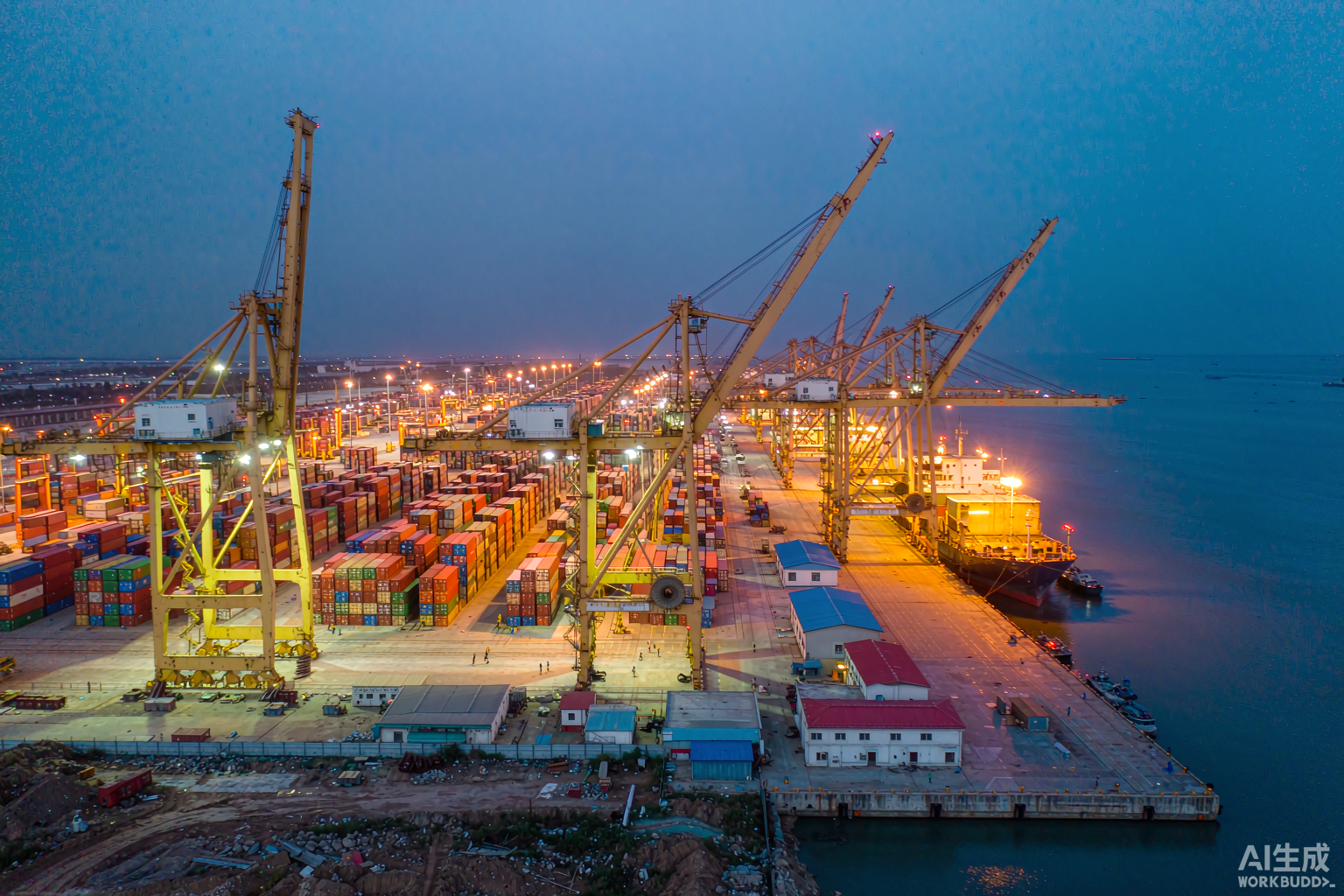
Container terminal loading Chinese tire shipments for export
OTR vs TBR vs PCR: Category Impact Matrix
OTR & mining: sharpest increases (7%–10%) — secure project volumes first
Mining and construction OTR leads this round with 7%–10% increases effective December 1, 2026. Carbon black-heavy compounds, smaller production runs, and hard-to-substitute sizes (26.5R25, 29.5R25 and above) make OTR the least flexible line in your catalog. Project buyers should secure Q1 volumes now. For a deeper demand read, see our OTR tire market outlook for 2026.
Supply is also shifting: Guizhou Tire recently rolled off its first 59/80R63 giant earthmover radial, and Sailun Shenyang's project adding 3.3 million all-steel tires plus 20,000 tons of non-highway capacity has been approved (industry updates via CFI and Tire Bao via Sina Finance, Nov 16, 2026). New capacity does not arrive before December 1.
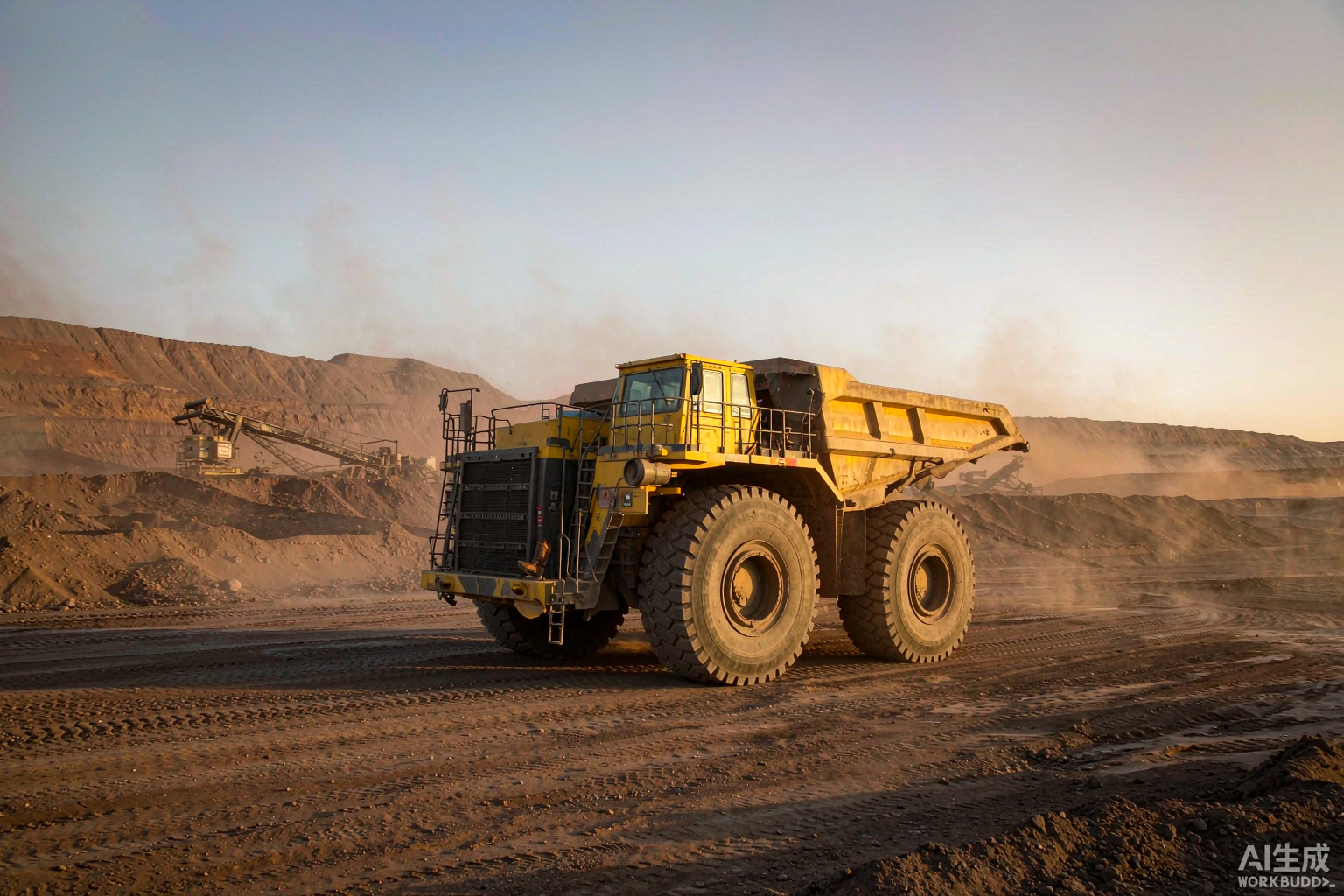
Mining haul truck fitted with large OTR tires at an open-pit mine
TBR: steady 3%–5%
All-steel truck and bus tires sit in the mainstream band: Wanda Baotong's full line is up 3%, Bayi Rubber TBR up 2%–3%, Prinx Chengshan all-steel up 3% from November 28, per notices compiled by CNAuto, Nov 11, 2026. All-steel raw-material cost is up 24.70% year on year, but TBR pricing is highly visible to fleet buyers and competitive on tender business, so pass-through is measured. Batch-buy standard sizes (12R22.5, 315/80R22.5 and similar) before December 1 to protect Q1 fleet budgets. For spec and benchmark context, see the 2026 TBR tire price guide.
PCR: smaller headline increases, most competitive pass-through
Semi-steel PCR headlines look milder, often 2%–3%, yet semi-steel raw-material cost is up 28.04% year on year, the sharpest move of the three categories (Tire Bao via Sina Finance, Nov 16, 2026). PCR is also the most crowded segment, so factories compete fiercely on export pricing even as costs rise. Expect aggressive landed quotes in December and January, then firmer levels once Q1 order books fill. Distributors with steady PCR turnover should cover core turnover SKUs in the first wave and leave room to chase Q1 promotions.
Table 1: OTR / TBR / PCR increase impact matrix (Q4 2026)
| Category | This round's increase | Primary cost driver | Procurement priority | Recommended action |
|---|---|---|---|---|
| OTR / Mining | 7%–10% effective Dec 1 | Carbon black, small-batch compounds, project demand | Secure now | Lock Q1 project volumes and production slots immediately |
| TBR (all-steel) | 3%–5% (mainstream 2%–5%) | All-steel raw-material cost +24.70% YoY | Batch-buy now | Cover core fleet sizes before Dec 1; write quote validity into the PO |
| PCR (semi-steel) | 2%–3% headline; competitive pass-through | Semi-steel raw-material cost +28.04% YoY | Selective / staged | Buy core turnover SKUs first; watch Q1 promotions on the balance |
Regional Playbook: Africa, Middle East, Latin America, Central Asia & Southeast Asia
Africa
From January to August 2026, EU imports of passenger-car and light-truck tires from China fell 32% year on year (China's share: 72% to 53%; ASEAN's: 7% to 24%), and the growth markets for Chinese tire exports are now Africa, the Middle East and Latin America (Tire Bao via Sina Finance, Nov 16, 2026). In practice, mills are sending more containers south and fewer to Europe. Part of that shift traces back to the EU tire regulatory triple shock of 2026, which pushed European importers to reweight their supply sources.
For African importers, Chinese mills are actively allocating capacity in your direction. Competition for December slots is real. Mining OTR and haulage TBR are the pressure points. Nigeria-bound buyers should confirm documentation early; review Nigeria SONCAP import requirements before you book containers. For broader demand and supply flows, see Africa and Middle East tire import trends.
Middle East
Fleet and logistics operators across the Gulf and Levant run high TBR turnover and growing PCR volumes. The 3%–5% TBR band is manageable on paper, but December 1 effective dates land inside year-end budget cycles and quote validity has tightened. A workable response is to split the annual buy: ship the critical half pre-December where old terms still hold, and book the remainder onto a Q1 production slot.
Latin America
Latin American distributors face a double squeeze: the same China tire price increase 2026 wave, plus local currency and import-policy volatility that can erase a quote before it clears customs. PCR and mid-range TBR dominate the mix. Shorten quote-review cycles, hold safety stock on fast-moving sizes, and do not over-commit to one brand or one shipment window. Latin America is now a growth market for Chinese tire exports, which means more offers and more need for landed-cost discipline.
Lucía (not her real name) runs a tire distribution business in Colombia. In November she received overlapping price-increase letters from two suppliers in the same week. She consolidated SKUs, moved core PCR and TBR sizes into one pre-December shipment, and pushed experimental patterns to a Q1 batch. She bought coverage where it counted and left the rest for Q1.
Central Asia & Southeast Asia
The same China tire price increase 2026 timeline applies to both regions, and December 1 is shared across most mills. Central Asian importers often serve cross-border fleets and re-export flows; Southeast Asian buyers compete in a region where ASEAN plants are taking share in Europe. Container bookings and production slots tighten together. Book early, split shipments across December and Q1, and keep customs documentation moving in parallel.
Table 2: Regional playbook comparison (Q4 2026 → Q1 2027)
| Region | Demand driver | Risk overlay | This quarter's procurement advice |
|---|---|---|---|
| Africa | Mining OTR + haulage TBR | FX volatility, import compliance (e.g., SONCAP) | Secure OTR project volumes now; confirm import docs before booking |
| Middle East | Fleet TBR + growing PCR | Year-end budget timing, very short quote validity | Split buy: pre-December shipment + Q1 slot booking |
| Latin America | Distribution PCR + mid-range TBR | Currency and import-policy swings | Shorten quote review cycles; safety stock on fast movers |
| Central Asia | Cross-border fleet and re-export | Transit logistics, simultaneous regional demand | Book slots early; split shipments across Dec/Q1 |
| Southeast Asia | Domestic fleet + distribution | Competition with ASEAN-based plants | Buy core SKUs before Dec 1; stay flexible on patterns |
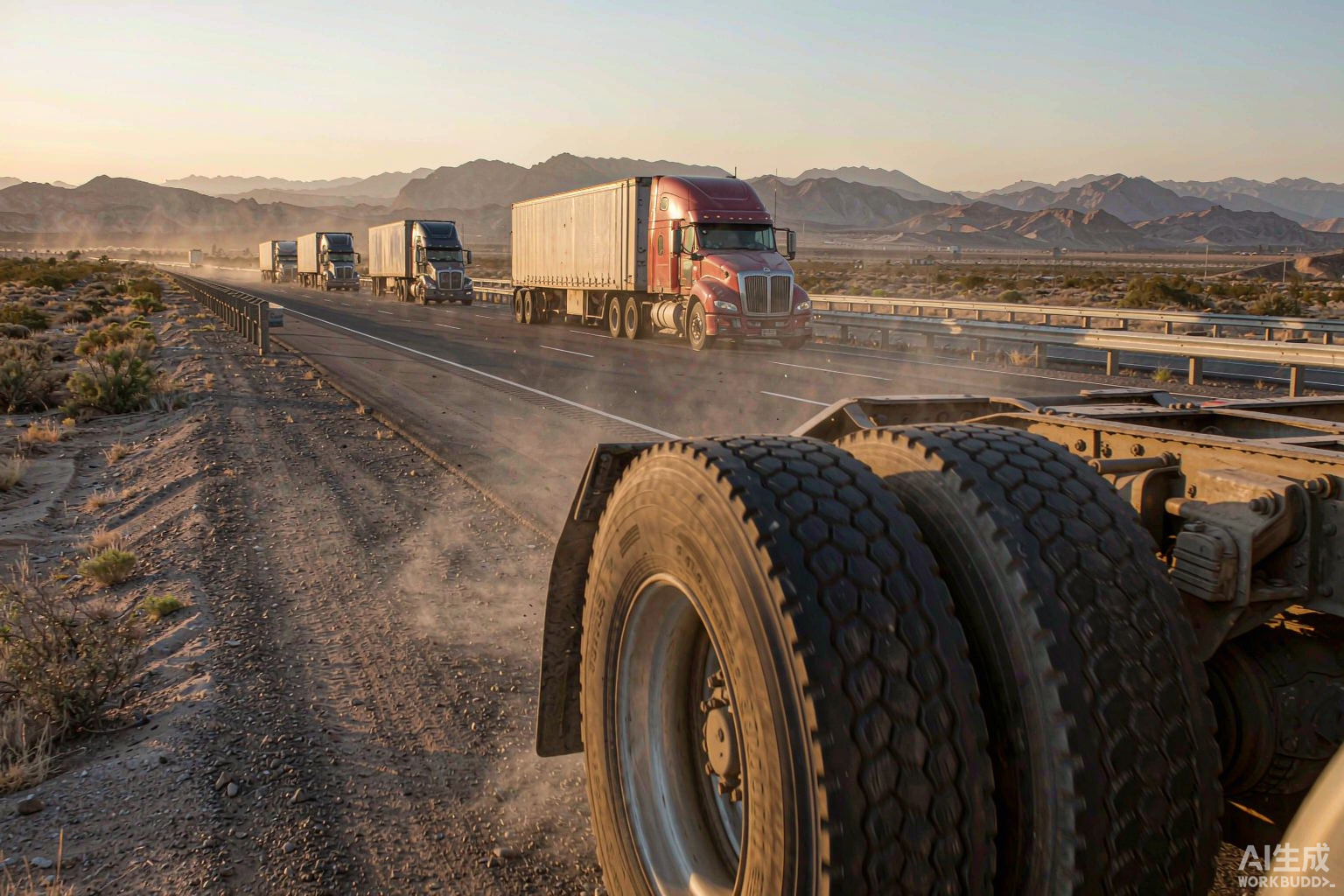
Commercial truck fleet running heavy-duty TBR tires on a highway
Six Procurement Actions Before December 1
These six actions turn the China tire price increase 2026 from a cost shock into a scheduling problem.
Action 1: Triage every SKU into secure-now, batch-buy, or wait.
List every size by machine criticality and turnover. Mining OTR and fleet-critical TBR go in the secure-now column. Standard TBR/PCR movers get batch-buy treatment before December 1. Slow or speculative patterns wait for Q1 promotions.
Action 2: Negotiate slots and shipping windows instead of price locks.
Since deposits no longer guarantee pre-increase prices, shift the conversation to production slots, vessel cutoffs and shipment windows. If you are building a multi-plant supply mix, review overseas factory sourcing options for flexible slot allocation.
Action 3: Put quote validity and shipment terms in writing.
Seven-day validity is the new normal. Require written expiry dates, FOB and CIF terms, and demurrage/detention allocation before you wire deposits. Get the terms in writing before you wire a deposit.
Action 4: Hedge with a brand portfolio rather than a single mill.
Spread volume across brands with different strengths: Double Coin for durable fleet and long-haul TBR, Fedcoin for value TBR and PCR programs, and Warrior for OTR and agricultural lines. New to the channel? See how to buy Double Coin tires from authorized distributors. For a wider brand view, see our 2026 top 10 commercial truck tire brand comparison.
Action 5: Calculate landed cost rather than FOB.
Insurance, freight, duty, port charges and clearing costs can swing more than the headline increase. Build a landed-cost sheet per SKU per destination before comparing offers. A 3%–5% FOB move can widen at the gate once local charges and FX move.
Action 6: Build your Q1 2027 procurement calendar now.
Even if December volumes are settled, sketch Q1 slots, budget bands and shipment windows this month. Mills plan export allocations several weeks ahead; early calendars get better slot options.
Planning Q1 volumes? Send your size list and target shipment windows to our export team for a slot and landed-cost review.
How Goldtop Supports Buyers Through the Increase
When price-increase letters stack up, a quotation is not enough. Buyers need an export partner who can hold supply steady. Goldtop operates one export desk with three brands (Double Coin, Fedcoin and Warrior), covering the full OTR, TBR and PCR range from a single platform. Browse our full OTR, TBR and PCR product catalog.
- Double Coin: proven durability for fleet and long-haul applications
- Fedcoin: competitive TBR and PCR programs for distributors and volume buyers
- Warrior: OTR and agricultural tires for mining, construction and farming
Why stable supply beats chasing the lowest FOB: in a rising-cost cycle, the cheapest quote is often the one that slips, gets rescheduled, or re-quotes at the port. Goldtop prioritizes shipment schedules and slot guarantees across all three brands, so your December and Q1 volumes move on your schedule.
Ready to protect your Q1 supply? Request a quote or contact our export team with your target sizes, volumes and destination ports. We will return a current offer with production slot and shipment timing options.
FAQ: China Tire Price Increases 2026
Are Chinese tire prices still rising in 2027?
Cost pressure from natural rubber and carbon black remains elevated entering 2027, and multiple mills have already posted December 1 increases. Budget for firm to slightly higher levels in Q1 2027, especially in OTR and mining sizes. Review offers monthly instead of assuming a pullback, and watch green and sustainable tire transition costs as a structural 2027 driver.
Should I stockpile tires before December 1?
Stockpile selectively. Secure mining OTR and fleet-critical TBR now where pre-increase terms remain available, batch-buy standard movers, and wait on slow SKUs. Full warehouses tie up cash and risk pattern obsolescence. Targeted coverage protects both cost and continuity. Revisit the list monthly.
Which tire category will increase the most: OTR, TBR or PCR?
Mining OTR faces the sharpest increases: 7%–10% effective December 1, 2026. TBR rises 2%–5% in the mainstream band, while PCR headline increases are smaller (about 2%–3%) even though semi-steel raw-material cost is up 28.04% year on year. Prioritize OTR coverage first.
Can I still lock in a price by paying a deposit?
No, not reliably for December 2026 shipments. Major producers including Sailun and Wanda Baotong have refused advance-payment price locks. Deposits now secure production slots and shipment priority rather than pre-increase prices. Negotiate slots and written validity terms instead. Reconfirm terms before each deposit.
How should African or Middle East importers adjust 2027 sourcing?
Prioritize supply stability over headline FOB: secure OTR and fleet TBR slots early, split shipments across Q1, confirm compliance steps like Nigeria SONCAP in advance, and hedge across brands and factories. With EU demand down 32% year on year in January–August 2026, mills are focused on Africa and the Middle East. Negotiate slots, not just price.
More import and compliance questions? See our tire import FAQ hub.
Conclusion
With the December 1 wave of the China tire price increase 2026, passive buying has a price. Lock production slots where you cannot lock prices. Calculate landed cost, not FOB. Triage your SKUs by criticality and hedge with brands and export partners who can hold shipment schedules when the market cannot hold prices.
Buyers who move in the next two weeks will still pay more than they did in August. They will pay on their own terms, with cargo on the water before Q1 pressure peaks.
Ready to secure your Q1 volumes? Contact our export team with your size list and destination ports for a current quote and production slot options. For more market updates, browse our tire blog.
Update log: 2026-11-22 — First published before the December 1 effective dates. Planned December update: actual executed increases vs. announced letters, and Q1 quote feedback.


Have a question ? We are here to help.



Tire Inquiry Form
Name*
Phone*
Email*
Leave word*


